


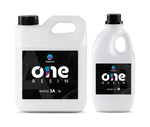


One of the most common questions from resin artists is whether they can mix epoxy hardener from one brand with resin from another. Understanding epoxy hardener compatibility is critical for successful projects and avoiding costly failures. This comprehensive guide from Magnifico Resins explains why mixing brands is dangerous, what happens when you use incompatible components, and how to ensure you're always using properly matched resin and hardener systems. Whether you're working with ONE Resin or 12H Resin, this guide ensures you understand the chemistry behind compatibility and make informed decisions that protect your resin for resin art projects and investments.
Why Epoxy and Hardener Must Be Matched
Epoxy resin systems are not universal formulations where any hardener works with any resin. Each art resin epoxy product is a carefully engineered chemical system where the resin and hardener are specifically formulated to work together at precise ratios and molecular structures.
The Chemistry of Compatibility
Epoxy resin contains epoxide functional groups with specific molecular weights and structures. The hardener contains amine groups designed to react with those specific epoxide groups at predetermined ratios. ONE Resin is formulated for 3:1 ratio with its matched hardener, while 12H Resin is engineered for 2:1 ratio with its specific hardener. These ratios aren't arbitrary—they reflect the stoichiometric balance required for complete chemical reaction.
What Makes Components Incompatible
Different manufacturers use different epoxide resins (bisphenol-A, bisphenol-F, novolac, etc.), different amine hardeners (aliphatic, cycloaliphatic, aromatic, etc.), different molecular weights affecting viscosity and cure speed, different additives for UV resistance, flexibility, or clarity, and different ratio requirements (1:1, 2:1, 3:1, 4:1, etc.). Mixing incompatible components disrupts the chemical balance, preventing proper cure and creating unpredictable results.
⚠️ Critical Rule
NEVER mix resin from one brand with hardener from another brand! Even if ratios seem similar, the chemical formulations are different. ONE Resin hardener is designed exclusively for ONE Resin epoxy. 12H Resin hardener works only with 12H epoxy. Mixing brands guarantees failure.
What Happens When You Mix Incompatible Components
Using mismatched resin and hardener creates a range of problems from minor imperfections to complete project failure.
Incomplete Cure
The most common result of incompatibility is incomplete cure where the surface remains sticky or tacky indefinitely, soft spots develop that never harden, the material has reduced strength and durability, and chemical resistance is compromised. This occurs because the molecular structures don't align properly, leaving unreacted epoxide or amine groups that prevent complete cross-linking.
Excessive Heat Generation
Incompatible components can cause uncontrolled exothermic reactions generating dangerous heat levels, smoking or fuming during cure, yellowing or discoloration from heat damage, cracking from thermal stress, and potential fire hazard in extreme cases. The chemical imbalance accelerates reaction rates unpredictably.
Physical Defects
Mismatched systems produce clouding or haziness instead of crystal clarity, amine blush (oily surface film), brittleness and cracking, poor adhesion to substrates, and separation or delamination. These defects cannot be fixed—the project must be redone with compatible components.
Unpredictable Cure Times
Incompatible resin and epoxy may cure much faster than expected (minutes instead of hours), much slower than expected (days or never), or cure unevenly with some areas hard and others soft. This unpredictability makes it impossible to plan projects or achieve consistent results.
| Compatibility Issue | Symptom | Cause | Prevention |
|---|---|---|---|
| Wrong Brand Mix | Sticky, won't cure | Molecular mismatch | Use matched components |
| Wrong Ratio | Soft or brittle | Chemical imbalance | Measure accurately |
| Expired Components | Slow or no cure | Degraded chemistry | Check dates, test first |
| Contamination | Cloudy, uneven cure | Foreign substances | Clean tools, seal bottles |
Common Compatibility Myths Debunked
Several misconceptions about epoxy hardener compatibility persist in the resin community. Let's address the most common myths.
Myth 1: "All 2:1 Ratio Resins Are Compatible"
False! Just because two products use 2:1 ratio doesn't mean their components are interchangeable. 12H Resin uses 2:1 ratio, but its hardener is formulated specifically for its epoxy formulation. Another brand's 2:1 system uses different chemistry. The ratio is only one factor—molecular structure, cure speed, and additives all differ between brands.
Myth 2: "I Can Use Any Hardener If I Adjust the Ratio"
False! You cannot compensate for incompatible chemistry by changing ratios. If you use the wrong hardener, no ratio adjustment will create proper cure. The molecular structures must match. Using ONE Resin with a different brand's hardener, even at 3:1 ratio, will fail because the amine groups don't match the epoxide groups.
Myth 3: "Expensive Resin Works with Any Hardener"
False! Price doesn't determine compatibility. Premium resins like those from Magnifico Resins are engineered as complete systems. The resin quality depends on using its matched hardener. Mixing expensive resin with cheap hardener (or vice versa) creates worse results than using a complete matched system at any price point.
Myth 4: "Small Amounts of Wrong Hardener Won't Matter"
False! Even small amounts of incompatible hardener disrupt the chemical balance. Adding 10% wrong hardener to 90% correct hardener still prevents proper cure. The entire batch becomes compromised. Always use 100% matched components from the same product line.
The Truth About Compatibility
Epoxy systems are engineered as complete packages. ONE Resin is a system: specific epoxy + specific hardener + specific ratio (3:1) = predictable results. 12H Resin is a different system with different chemistry. Never mix systems.
Ensuring Component Compatibility
Follow these practices to guarantee you're always using compatible resin and hardener components.
Buy Complete Kits
Purchase resin and hardener together as matched kits from Magnifico Resins. ONE Resin comes as a complete 3.2kg kit with matched hardener. 12H Resin comes as a complete 3kg kit. These kits guarantee compatibility because components are formulated together.
Label Your Bottles
If you transfer resin or hardener to different containers, label them clearly with product name, component type (resin or hardener), ratio (3:1 or 2:1), and purchase date. This prevents accidentally mixing components from different products. Store ONE Resin components separately from 12H Resin components to avoid confusion.
Use Dedicated Tools
Keep separate measuring cups and stir sticks for different products. Even trace amounts of one product's hardener can contaminate another product's resin. If you work with both ONE Resin and 12H Resin, use color-coded tools (blue for ONE, red for 12H, for example) to prevent cross-contamination.
Check Batch Numbers
When ordering replacement resin or hardener, verify you're ordering the correct product. Don't assume "epoxy hardener" is universal. Specify "ONE Resin hardener" or "12H Resin hardener" when ordering. Check batch numbers to ensure components are from the same product line.
What to Do If You've Mixed Incompatible Components
If you've accidentally mixed resin and hardener from different brands or products, here's how to minimize damage.
Before Pouring
If you realize the mistake before pouring, do not use the mixture. Dispose of it properly by allowing it to cure in a disposable container (it may or may not cure properly), then dispose of cured material in regular trash. Do not pour down drains. Mix a fresh batch with correct matched components.
After Pouring
If you've already poured incompatible mixture onto your project, monitor it closely. If it begins smoking, overheating, or showing signs of dangerous reaction, move to well-ventilated area immediately. If it simply won't cure after 72 hours, you must remove the uncured material (difficult and messy), clean substrate thoroughly, and start over with matched components from ONE Resin or 12H Resin.
Learning from Mistakes
Document what went wrong to prevent recurrence. Take photos of bottle labels to verify you used wrong components. Implement a labeling system for your workspace. Create a checklist that includes verifying component compatibility before mixing. Most compatibility mistakes happen due to rushed work or poor organization.
Special Cases: When Compatibility Questions Arise
Certain situations create confusion about compatibility. Here's guidance for common scenarios.
Running Out of Hardener
If you run out of hardener mid-project, do not substitute hardener from another product. Order more of the correct hardener and wait for delivery, or purchase a complete new kit of the same product. Trying to "make do" with wrong hardener ruins your project. Plan ahead by ordering adequate quantities and keeping spare hardener on hand.
Mixing ONE Resin and 12H Resin
Can you use ONE Resin as a base layer and 12H Resin as a top coat? Yes, but only if each layer uses its own matched hardener. Mix ONE Resin with ONE hardener at 3:1, let cure 12-24 hours, then mix 12H Resin with 12H hardener at 2:1 for top coat. Never mix ONE Resin with 12H hardener or vice versa.
Using Old Resin with New Hardener
If your resin is 12 months old but hardener is fresh (or vice versa), they're still compatible if they're from the same product. However, test a small batch first because aged components may have degraded properties. If the test batch cures properly, the components are still usable together. If not, replace both components with fresh kit.
International Products
Some artists import resin from other countries. If you're using imported resin, you must also import its matched hardener. Don't try to use Indian hardener with imported resin or vice versa. The formulations differ by region and manufacturer. Stick with complete systems from Magnifico Resins designed for Indian climate and conditions.
The Cost of Incompatibility
Using incompatible components seems like a money-saving shortcut, but it's actually expensive.
Material Waste
Failed projects waste both the incompatible materials you used and the substrate (canvas, wood, molds). A ₹2,000 canvas coated with incompatible resin becomes garbage. The ₹500 of mismatched resin is wasted. Total loss: ₹2,500 plus your time.
Time Investment
A failed project wastes hours of creative work, preparation time, and cleanup. If you spent 8 hours on a piece that fails due to incompatible components, that's 8 hours you can't recover. For professional artists, this represents lost income and missed deadlines.
Reputation Damage
If you sell resin art and a piece fails due to incompatible components, you damage your reputation. Customers expect durability and quality. A sticky, uncured piece reflects poorly on your skills and brand, even if the failure was due to component mismatch rather than technique.
The Smart Investment
Buying matched kits from Magnifico Resins costs slightly more upfront but guarantees success. ONE Resin at ₹2,080 for 3.2kg or 12H Resin at ₹1,950 for 3kg provides complete, compatible systems. This investment protects your projects, time, and reputation.
Frequently Asked Questions
Q: Can I mix epoxy hardener from one brand with resin from another brand?
No, absolutely not! Never mix components from different brands or products. Each resin and hardener system is chemically engineered to work together at specific ratios and molecular structures. ONE Resin hardener is formulated exclusively for ONE Resin epoxy at 3:1 ratio. 12H Resin hardener works only with 12H epoxy at 2:1 ratio. Mixing brands causes incomplete cure, excessive heat, cloudiness, or complete failure. Always use matched components from the same product line.
Q: What happens if I accidentally use the wrong hardener?
Using wrong hardener prevents proper cure, creating sticky surfaces that never harden, soft spots or uneven cure, excessive heat generation (potentially dangerous), clouding or discoloration, brittleness and cracking, or complete failure to cure. If you realize the mistake before pouring, dispose of the mixture and start over. If you've already poured, you must remove the failed material and redo the project with correct matched components. There's no fix for incompatible chemistry.
Q: Can I use ONE Resin hardener with 12H Resin epoxy?
No! ONE Resin hardener is formulated for ONE Resin epoxy at 3:1 ratio. 12H Resin hardener is formulated for 12H epoxy at 2:1 ratio. These are different chemical systems with different molecular structures. Using ONE hardener with 12H resin (or vice versa) creates incompatible mixture that won't cure properly. Always use each product's matched hardener. Never mix components between different Magnifico products.
Q: How can I tell if my resin and hardener are compatible?
Compatible components come from the same product kit or product line. Check bottle labels to verify both say "ONE Resin" or both say "12H Resin." If you're unsure, test a small 50ml batch: mix at the correct ratio, pour into a small mold, and observe for 72 hours. Proper cure means hard, non-tacky surface with crystal clarity. If the test fails (sticky, cloudy, won't cure), the components are incompatible. Always buy complete matched kits from Magnifico Resins to guarantee compatibility.
Q: What should I do if I run out of hardener mid-project?
Never substitute hardener from a different product! Order more of the correct hardener and wait for delivery, or purchase a complete new kit of the same product. If you're mid-project and can't wait, consider whether you can pause at a natural stopping point. For example, if coating a table, complete the current coat with available material, let it cure, then continue with fresh matched components. Trying to use wrong hardener to "finish quickly" ruins the entire project.
Q: Are expensive resins compatible with cheaper hardeners to save money?
No! Compatibility has nothing to do with price—it's about chemical formulation. Premium ONE Resin or 12H Resin requires its matched hardener regardless of cost. Mixing expensive resin with cheap hardener creates worse results than using a complete matched system at any price. The resin's quality depends on proper chemical reaction with its designed hardener. Save money by buying complete kits, not by mixing incompatible components.
Conclusion: Compatibility Is Non-Negotiable
Epoxy hardener compatibility isn't optional or flexible—it's a fundamental requirement for successful resin projects. The chemistry of art resin epoxy systems demands that resin and hardener be perfectly matched in molecular structure, ratio, and formulation. ONE Resin with its 3:1 hardener and 12H Resin with its 2:1 hardener are complete engineered systems that cannot be mixed or substituted.
Remember the key principles: never mix brands or products (each system is unique), always buy complete matched kits from Magnifico Resins, verify component compatibility before mixing, use dedicated tools to prevent cross-contamination, and when in doubt, test small batches first. The small investment in proper matched components protects your projects, time, materials, and reputation. Compatibility isn't where you cut corners—it's where you ensure success.
Ready to Work with Guaranteed Compatible Systems?
Order complete matched kits from Magnifico Resins. ONE Resin (3.2kg kit with matched hardener) or 12H Resin (3kg kit with matched hardener) provide everything you need for successful projects. Add metallic powders for stunning effects. Ships across India with complete instructions!


