


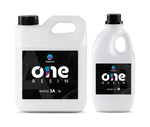


Proper resin epoxy mixing is the foundation of successful projects, yet it's where many beginners make critical mistakes. Understanding how to mix resin and hardener thoroughly while minimizing bubbles, achieving complete blending, and working within pot life determines whether your project succeeds or fails. This comprehensive guide from Magnifico Resins reveals professional mixing techniques for ONE Resin and 12H Resin, covering everything from proper stirring methods to temperature management, bubble prevention, and the critical double-mixing technique. Whether you're creating resin for resin art or coating furniture, mastering these mixing fundamentals ensures professional results every time.
Why Proper Mixing Is Critical
Incomplete or improper mixing is the leading cause of project failures, even when ratios are correct.
The Chemistry of Mixing
When you combine resin and hardener, you're initiating a chemical reaction where epoxide groups in the resin react with amine groups in the hardener. This reaction only occurs when molecules come into direct contact. Incomplete mixing leaves pockets of unmixed resin or hardener that never cure properly, creating soft spots, sticky areas, or uneven hardness. Thorough mixing ensures every epoxide group finds an amine group to react with, producing complete cure and uniform properties throughout your art resin epoxy.
Common Mixing Failures
Soft spots or sticky areas result from unmixed pockets of pure resin or hardener. Cloudy or streaky appearance comes from incomplete blending of components. Uneven cure with some areas hard and others soft indicates poor mixing. Extended cure time or surfaces that never fully harden signal insufficient mixing. All these problems occur even with correct ratios (3:1 for ONE Resin, 2:1 for 12H Resin) if mixing is inadequate.
⚠️ Critical Mixing Rule
Mix for a MINIMUM of 3-4 minutes, scraping sides and bottom thoroughly. Most beginners undermix, stopping after 1-2 minutes. The extra time ensures complete blending and prevents costly failures. Use the double-mixing method for guaranteed results.
The Professional Mixing Process
Follow this systematic approach for perfect resin and hardener mixing every time.
Step 1: Prepare Your Workspace
Set up in clean, dust-free environment at 24-26°C. Gather all tools before starting: mixing containers (two clean containers for double-mixing), stirring sticks or silicone spatulas, measuring cups or digital scale, timer or clock, and gloves for safety. Have your project surface ready so you can pour immediately after mixing. Warm resin and hardener bottles in warm water for 10-15 minutes if cold (below 20°C) to reduce viscosity and improve mixing.
Step 2: Measure Accurately
Measure resin and hardener at correct ratio using scale or graduated cups. For ONE Resin: 3 parts resin, 1 part hardener. For 12H Resin: 2 parts resin, 1 part hardener. Pour resin into first mixing container. Add hardener to the resin. Verify measurements are correct before proceeding—once mixed, ratio errors cannot be fixed.
Step 3: Initial Mixing (3-4 Minutes)
Start timer for 3-4 minutes minimum. Stir slowly and deliberately using figure-8 or circular pattern. Scrape sides of container thoroughly—unmixed material clings to walls. Scrape bottom of container completely—material settles there. Mix at moderate speed—not too fast (creates bubbles) or too slow (incomplete blending). Continue for full 3-4 minutes even if mixture looks uniform. The extended time ensures molecular-level blending.
Step 4: Double-Mixing (Critical Step)
Pour mixed resin from first container into second clean container. This transfers material and leaves unmixed residue behind. Stir again in second container for 1 minute, scraping sides and bottom. This second mix ensures any unmixed material from container walls or bottom gets incorporated. The double-mixing method is the professional standard and virtually eliminates soft spot problems.
Step 5: Rest Period (2-3 Minutes)
Let mixed resin rest for 2-3 minutes before pouring. This allows initial bubbles to rise to surface naturally. Don't skip this step—it significantly reduces bubble problems. During rest, prepare your pour (verify surface is level, have torch ready, check temperature). The self-degassing properties of ONE Resin work during this rest period.
Step 6: Pour Within Pot Life
Pour mixed resin onto project within pot life: 120 minutes for ONE Resin, 40 minutes for 12H Resin. Don't leave mixed resin in container where heat builds up. Pour immediately after rest period for best results. Work efficiently but not rushed—the pot life provides adequate time for careful application.
| Mixing Step | Duration | Key Actions | Why It Matters |
|---|---|---|---|
| Measure | 2-3 min | Accurate ratio (3:1 or 2:1) | Correct ratio ensures cure |
| Initial Mix | 3-4 min | Scrape sides/bottom thoroughly | Complete molecular blending |
| Double-Mix | 1 min | Pour to new container, mix again | Eliminates unmixed pockets |
| Rest | 2-3 min | Let bubbles rise naturally | Reduces bubble problems |
| Pour | Within pot life | Apply to project immediately | Prevents heat buildup |
Mixing Speed and Technique
How you stir affects both mixing quality and bubble incorporation.
The Goldilocks Principle
Mixing speed must be just right—not too fast, not too slow. Too fast (vigorous stirring) incorporates excessive air creating bubble problems. Too slow (gentle stirring) fails to blend components thoroughly. Just right (moderate, deliberate stirring) achieves complete blending with minimal air incorporation. Think "stirring cake batter" not "whipping cream." Use smooth, continuous motions without splashing or creating vortex.
Stirring Patterns
Figure-8 pattern covers entire container efficiently, reaching all areas. Circular pattern works well for round containers. Side-to-side pattern ensures edge coverage. Combine patterns during mixing—start with figure-8, switch to circular, finish with side-to-side. This variation ensures no area gets missed. Always scrape sides and bottom regardless of pattern used.
Tool Selection
Flat wooden stir sticks work well for small to medium batches. Silicone spatulas excel at scraping container walls clean. Plastic mixing paddles handle large batches efficiently. Avoid metal tools which can react with some hardeners. Whatever tool you use, ensure it reaches bottom and sides of container. For large batches with ONE Resin, use wide paddle to cover more area efficiently.
Temperature Management During Mixing
Temperature affects viscosity, mixing ease, and pot life of your resin liquid.
Optimal Mixing Temperature
The ideal temperature range is 24-26°C for both components and workspace. At this temperature, resin flows easily for thorough mixing, bubbles rise and escape naturally, pot life matches stated specifications (120 min for ONE Resin, 40 min for 12H Resin), and self-leveling properties work optimally. Work in air-conditioned space during India's hot summer months to maintain this temperature.
Warming Cold Resin
If resin or hardener is cold (below 20°C), warm before mixing. Place bottles in warm (not hot) water for 10-15 minutes. Bring to 24-26°C—test by touching bottle (should feel room temperature). Never microwave or use direct heat—this causes localized overheating. Cold resin is thick and difficult to mix thoroughly, trapping bubbles and preventing proper blending.
Cooling Hot Resin
In temperatures above 30°C, resin becomes too thin and cures too quickly. Work in air-conditioned space if possible. Mix smaller batches to reduce heat generation. Pour immediately after mixing—don't leave in container. The exothermic reaction accelerates in hot conditions, reducing pot life by 20-30%. Plan accordingly and work efficiently.
India Climate Tip
In tropical climate, temperature control is critical. Summer temperatures above 30°C reduce pot life significantly. Work in AC spaces, mix smaller batches, and pour immediately. Winter temperatures below 20°C require warming bottles before mixing. Consistent 24-26°C ensures predictable results.
Preventing Bubbles During Mixing
While some bubbles are inevitable, proper technique minimizes them significantly.
Bubble Prevention Strategies
Mix slowly and deliberately—vigorous stirring incorporates air. Pour resin and hardener together gently—don't splash or create turbulence. Avoid creating vortex (whirlpool) in container—this pulls air into mixture. Use smooth, continuous motions without lifting tool out of liquid. Scrape sides and bottom without splashing. These techniques reduce bubble formation by 70-80%.
The Rest Period Advantage
The 2-3 minute rest after mixing allows bubbles to rise naturally. During this time, larger bubbles break surface and pop. Smaller bubbles coalesce into larger ones that rise more easily. The self-degassing properties of ONE Resin work during rest period. Don't skip this step—it's your first line of defense against bubble problems.
Warming for Bubble Release
Warm resin (24-26°C) has lower viscosity allowing bubbles to rise faster. Cold resin traps bubbles due to high viscosity. This is another reason to warm components before mixing. The easier flow helps bubbles escape during rest period and after pouring.
Adding Pigments and Additives
When adding metallic powders or colors, timing and technique matter.
When to Add Pigments
ALWAYS add pigments AFTER mixing resin and hardener together at correct ratio. Mix resin and hardener first (3:1 for ONE Resin, 2:1 for 12H Resin). Stir thoroughly for 3-4 minutes. Pour into second container and mix again (double-mixing). Add pigments to fully mixed resin. Stir for additional 1-2 minutes to distribute color evenly. Never add pigments to unmixed resin or hardener alone—this interferes with chemical reaction.
Pigment Quantities
For metallic powders: 2-5% by weight creates shimmer and sparkle, 5-10% creates opaque metallic coverage. For liquid pigments: follow manufacturer recommendations, typically 2-6%. Keep total additives under 10% by weight to prevent cure issues. Measure pigments by weight for accuracy. Mix thoroughly to ensure even distribution—streaky color indicates incomplete mixing.
Batch Size Considerations
The size of your batch affects mixing technique and heat generation.
Small Batches (Under 200ml)
Small batches are easier to mix thoroughly but harder to measure accurately. Use precise tools (digital scale or small graduated cups). Mix for full 3-4 minutes even though volume is small. Use narrow container so stirring tool reaches all areas. Small batches generate minimal heat, making them safe for learning. 12H Resin is ideal for small batch work.
Large Batches (Over 2 Liters)
Large batches require extra attention to thorough mixing. Use wide paddle or large spatula to cover more area. Mix for full 4 minutes minimum—large volume needs extra time. Pour into second container and mix again (double-mixing is critical for large batches). Pour immediately after mixing—large batches generate more heat. Consider splitting very large needs (over 5 liters) into multiple batches. The 120-minute pot life of ONE Resin accommodates large batch application.
Common Mixing Mistakes
Avoid these frequent errors that cause project failures.
Mistake 1: Undermixing
Stopping after 1-2 minutes because mixture "looks uniform" is the most common error. Resin and hardener may appear blended but aren't mixed at molecular level. Always mix for full 3-4 minutes minimum. Use double-mixing method for guaranteed results. The extra time prevents soft spots and incomplete cure.
Mistake 2: Not Scraping Sides and Bottom
Unmixed material clings to container walls and settles on bottom. If you don't scrape thoroughly, this material gets poured onto your project and never cures. Scrape sides completely during mixing. Scrape bottom thoroughly. Use spatula or stick that reaches all areas. This simple step prevents 90% of soft spot problems.
Mistake 3: Mixing Too Fast
Vigorous stirring incorporates excessive air creating bubble problems. Mix at moderate speed—think stirring, not whipping. Avoid creating vortex or splashing. Use smooth, deliberate motions. The goal is thorough blending, not speed. Slower mixing with longer duration beats fast mixing with short duration.
Mistake 4: Skipping Double-Mixing
Mixing in one container leaves unmixed residue on walls and bottom. The double-mixing method (mix, pour to new container, mix again) eliminates this problem. Professional artists always double-mix. The extra minute and second container are worth the guaranteed results. This technique virtually eliminates soft spot failures.
Troubleshooting Mixing Issues
Identify and prevent common mixing-related problems.
Streaky or Swirly Appearance
Cause: Incomplete mixing of resin and hardener. Solution: Mix longer (4+ minutes), scrape sides and bottom thoroughly, use double-mixing method. Prevention: Follow proper mixing process and don't rush. Streaks indicate unmixed material that won't cure properly.
Excessive Bubbles
Cause: Mixing too vigorously, cold resin, or not allowing rest period. Solution: Mix at moderate speed, warm resin to 24-26°C, allow 2-3 minute rest. Prevention: Proper technique and temperature control prevent most bubble issues with both ONE Resin and 12H Resin.
Resin Thickening During Mixing
Cause: Ambient temperature too high or batch size too large generating heat. Solution: Work in cooler environment (24-26°C), mix smaller batches, pour immediately. Prevention: Temperature control and appropriate batch sizing for conditions.
Frequently Asked Questions
Q: How long should I mix resin and hardener?
Mix for MINIMUM 3-4 minutes, scraping sides and bottom thoroughly throughout. Most beginners undermix, stopping after 1-2 minutes when mixture "looks uniform." The extended time ensures molecular-level blending. Use double-mixing method: mix 3-4 minutes in first container, pour into second clean container, mix again for 1 minute. This guarantees complete blending and prevents soft spots. Total mixing time: 4-5 minutes for both ONE Resin and 12H Resin.
Q: What is the double-mixing method and why is it important?
Double-mixing means mixing in first container for 3-4 minutes, pouring into second clean container, then mixing again for 1 minute. This technique eliminates unmixed material that clings to container walls and bottom. It's the professional standard because it virtually eliminates soft spot problems. The extra minute and second container are worth guaranteed results. Use this method for all projects, especially important ones or large batches.
Q: Can I mix resin too much?
No, you cannot overmix resin and hardener. Extended mixing (5-10 minutes) won't harm the chemical reaction. The only downside is incorporating more bubbles if mixing too vigorously. Mix at moderate speed for 3-4 minutes minimum—longer is fine if you maintain moderate speed. The risk of undermixing (soft spots, incomplete cure) far exceeds any risk of overmixing. When in doubt, mix longer.
Q: Why does my cured resin have soft spots?
Soft spots result from incomplete mixing leaving pockets of unmixed resin or hardener. Even with correct ratio (3:1 for ONE Resin, 2:1 for 12H Resin), inadequate mixing causes this problem. Prevention: mix for full 3-4 minutes, scrape sides and bottom thoroughly, use double-mixing method (pour into second container and mix again). These steps ensure complete blending and eliminate soft spot issues.
Q: Should I add metallic powders before or after mixing resin and hardener?
ALWAYS add metallic powders AFTER mixing resin and hardener at correct ratio. Mix resin and hardener first (3:1 or 2:1), stir for 3-4 minutes, use double-mixing method, then add pigments (2-10% by weight), and stir for additional 1-2 minutes. Never add pigments to unmixed components—this interferes with chemical reaction. Adding after ensures proper cure while achieving desired color.
Q: What temperature should resin be for mixing?
Optimal mixing temperature is 24-26°C for both resin, hardener, and workspace. At this temperature, resin flows easily for thorough mixing, bubbles rise naturally, and pot life matches specifications. If components are cold (below 20°C), warm bottles in warm water for 10-15 minutes before mixing. Never microwave or use direct heat. In India's hot climate, work in AC spaces to maintain proper temperature and prevent accelerated cure.
Conclusion: Mastering Professional Mixing
Professional resin epoxy mixing combines accurate ratios, thorough blending, and proper technique. Whether using ONE Resin's 3:1 ratio or 12H Resin's 2:1 ratio, the mixing fundamentals remain the same: measure accurately, mix for 3-4 minutes minimum, scrape sides and bottom thoroughly, use double-mixing method, allow 2-3 minute rest, and pour within pot life.
Remember the key principles: never undermix (3-4 minutes minimum is non-negotiable), always scrape container sides and bottom (unmixed material causes soft spots), use double-mixing method for guaranteed results (mix, pour to new container, mix again), work at proper temperature (24-26°C for optimal flow and cure), and add pigments AFTER mixing resin and hardener (never before). Master these techniques with quality products from Magnifico Resins and you'll achieve professional, consistent results on every project.
Ready to Mix Like a Professional?
Order ONE Resin or 12H Resin from Magnifico Resins. Each kit includes complete mixing instructions and ratio guidelines. Add metallic powders for stunning color effects. Ships across India with technical support!


