


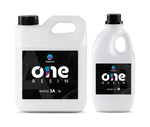


Accurate resin mixing ratios are the single most critical factor for successful projects. Even small deviations from the correct ratio can result in sticky surfaces, incomplete cure, or brittle results. This comprehensive guide from Magnifico Resins explains everything you need to know about measuring and mixing ONE Resin and 12H Resin at their precise ratios. Learn why ratios matter, how to measure by volume and weight, common mistakes to avoid, and professional techniques that ensure perfect results every time. Whether you're a beginner learning resin for resin art or an experienced creator, mastering mixing ratios guarantees you never waste materials on ratio errors again.
Why Mixing Ratios Are Critical
Understanding the chemistry behind resin and hardener ratios helps you appreciate why precision matters.
The Chemical Balance
Epoxy resin contains epoxide groups that must react with amine groups in the hardener to cure properly. The ratio represents the stoichiometric balance where epoxide and amine groups are perfectly matched. ONE Resin uses 3:1 ratio (three parts resin to one part hardener) because its specific epoxide and amine formulations require this balance. 12H Resin uses 2:1 ratio for the same reason—different chemistry, different ratio. These ratios are not arbitrary or adjustable.
What Happens with Wrong Ratios
Too much resin (not enough hardener) leaves unreacted epoxide groups causing sticky, tacky surfaces that never fully harden, soft spots that dent easily, extended cure time (may take weeks instead of 72 hours), and yellowing or clouding over time. Too much hardener (not enough resin) leaves unreacted amine groups causing brittle, weak surface prone to cracking, amine blush (oily, cloudy film on surface), reduced clarity and yellowing, and potential skin irritation from unreacted amines. Neither scenario can be fixed—the project must be redone.
⚠️ Critical Rule
NEVER assume all resins use the same ratio! ONE Resin is 3:1, NOT 1:1 or 2:1. 12H Resin is 2:1, NOT 1:1 or 3:1. Always verify the ratio for your specific product before mixing. Using the wrong ratio guarantees failure.
Understanding ONE Resin's 3:1 Ratio
The 3:1 ratio means three parts resin to one part hardener, measured by volume or weight.
Measuring 3:1 by Volume
Volume measurement uses measuring cups, graduated containers, or any vessel where you measure liquid quantity. For ONE Resin: 300ml resin + 100ml hardener = 400ml total mixed resin, or 600ml resin + 200ml hardener = 800ml total, or 1.5 liters resin + 0.5 liters hardener = 2 liters total. The total is always 4 parts (3 + 1). To calculate: divide your needed quantity by 4 to find hardener amount, then multiply by 3 for resin amount. Example: need 800ml total ÷ 4 = 200ml hardener, × 3 = 600ml resin.
Measuring 3:1 by Weight
Weight measurement uses a digital scale and accounts for density differences. For ONE Resin, the weight ratio is approximately 100:33 (resin:hardener). For 1kg total: 750g resin + 250g hardener = 1,000g total. Weight is more accurate than volume, especially for large batches, because it eliminates errors from meniscus reading and temperature-related volume changes. Professional artists prefer weight measurement for precision.
Quick Reference for Common Quantities
For 100ml total: 75ml resin + 25ml hardener. For 500ml total: 375ml resin + 125ml hardener. For 1 liter total: 750ml resin + 250ml hardener. For 2 liters total: 1,500ml resin + 500ml hardener. For 5 liters total: 3,750ml resin + 1,250ml hardener. Always add 10-15% extra to account for mixing containers and spillage.
| Total Needed | ONE Resin (3 parts) | Hardener (1 part) | Typical Application |
|---|---|---|---|
| 100ml | 75ml | 25ml | Small coaster or test batch |
| 400ml | 300ml | 100ml | 16x20" canvas |
| 1 liter | 750ml | 250ml | Large tray or small table |
| 2 liters | 1,500ml | 500ml | 24x36" canvas or coffee table |
| 5 liters | 3,750ml | 1,250ml | Dining table or river table |
Understanding 12H Resin's 2:1 Ratio
The 2:1 ratio means two parts resin to one part hardener, a common professional-grade ratio.
Measuring 2:1 by Volume
For 12H Resin: 200ml resin + 100ml hardener = 300ml total, or 400ml resin + 200ml hardener = 600ml total, or 1 liter resin + 0.5 liters hardener = 1.5 liters total. The total is always 3 parts (2 + 1). To calculate: divide your needed quantity by 3 to find hardener amount, then multiply by 2 for resin amount. Example: need 600ml total ÷ 3 = 200ml hardener, × 2 = 400ml resin.
Measuring 2:1 by Weight
For 12H Resin, weight ratio is approximately 100:45 (resin:hardener). For 1kg total: 690g resin + 310g hardener = 1,000g total. Use digital scale accurate to at least 1 gram for precision. Weight measurement is especially valuable for small batches where volume errors are magnified.
Quick Reference for Common Quantities
For 90ml total: 60ml resin + 30ml hardener. For 300ml total: 200ml resin + 100ml hardener. For 600ml total: 400ml resin + 200ml hardener. For 1.5 liters total: 1,000ml resin + 500ml hardener. For 3 liters total: 2,000ml resin + 1,000ml hardener. Add 10-15% extra for safety margin.
| Total Needed | 12H Resin (2 parts) | Hardener (1 part) | Typical Application |
|---|---|---|---|
| 90ml | 60ml | 30ml | Jewelry pieces (5-6 items) |
| 300ml | 200ml | 100ml | Small canvas or keychains |
| 600ml | 400ml | 200ml | 12x16" canvas top coat |
| 1.5 liters | 1,000ml | 500ml | Side table or multiple coats |
Professional Measuring Methods
Accuracy in measurement determines success or failure. Use these professional techniques.
Method 1: Digital Scale (Most Accurate)
Digital scales eliminate human error and account for temperature variations. Use scale accurate to 1 gram minimum (0.1 gram for small batches). Place mixing container on scale and tare to zero. Pour resin to desired weight and note the amount. Tare scale again to zero. Pour hardener to correct weight based on ratio. For ONE Resin: if you poured 300g resin, add 100g hardener. For 12H Resin: if you poured 200g resin, add 100g hardener. This method is foolproof and preferred by professionals.
Method 2: Graduated Measuring Cups
Use clear graduated cups with ml markings. Pour resin to appropriate line, then pour hardener to its line in separate cup, and combine in mixing container. Always read at eye level to avoid parallax error (reading from angle creates inaccuracy). Temperature affects volume, so work in consistent 24-26°C environment. This method works well for most projects when done carefully.
Method 3: The Double-Container Method
Measure resin in one container and hardener in another, then combine in third mixing container. This prevents contamination and allows you to verify measurements before mixing. If you make an error, you can adjust before combining rather than wasting mixed resin. Pour resin into first container and measure. Pour hardener into second container and measure. Verify both measurements are correct. Combine in third clean container and mix thoroughly. This extra step ensures accuracy.
Pro Measurement Tip
For large batches, weigh both components separately before combining. This allows you to verify the ratio is correct before mixing. If measurements are off, adjust before combining. Once mixed, ratio errors cannot be fixed.
Common Mixing Ratio Mistakes
Understanding common errors helps you avoid costly failures.
Mistake 1: Assuming 1:1 Ratio
Many beginners assume all epoxy uses 1:1 ratio because some hardware store epoxies do. This is wrong for art resin epoxy! ONE Resin is 3:1 and 12H Resin is 2:1. Using 1:1 ratio with either product creates massive excess hardener, causing brittle, weak results with amine blush. Always check your specific product's ratio.
Mistake 2: Confusing Volume and Weight
Resin and hardener have different densities, so volume and weight ratios differ slightly. If instructions say 3:1 by volume, don't use 3:1 by weight—the ratio will be wrong. Stick to one measurement method (volume OR weight) and use the correct ratio for that method. Most beginners should use volume measurement with graduated cups.
Mistake 3: Eyeballing Measurements
Never estimate or guess ratios. "About 3 to 1" or "roughly equal parts" guarantees failure. Use measuring tools—graduated cups or digital scales. The difference between 3:1 and 2.5:1 seems small but prevents proper cure. Precision matters. Invest in proper measuring tools (₹500-1,000) to protect your projects and materials.
Mistake 4: Not Accounting for Container Residue
Resin and hardener cling to container walls. If you measure 300ml resin but 20ml stays in the cup, you only poured 280ml. This throws off your ratio. Use the double-mixing method: mix in first container, pour into second clean container, mix again. This ensures all material is incorporated and ratio remains accurate.
Batch Size Considerations
The size of your batch affects measuring accuracy and working time.
Small Batches (Under 200ml)
Small batches are harder to measure accurately because small errors represent larger percentage mistakes. A 5ml error in 50ml batch is 10% off, but the same 5ml error in 500ml batch is only 1% off. Use precise digital scale for small batches. 12H Resin is ideal for small batch work like jewelry. Mix only what you need—small batches waste less if errors occur.
Large Batches (Over 2 Liters)
Large batches generate more exothermic heat during curing. For batches over 2 liters, consider splitting into multiple smaller batches and pouring in layers. ONE Resin's 120-minute pot life accommodates large batch mixing and application. Use weight measurement for large batches—it's more accurate and easier than measuring multiple liters by volume.
Calculating for Multiple Coats
If your project requires multiple coats (seal coat + flood coat + top coat), calculate each coat separately and mix fresh batches. Don't try to mix one giant batch for all coats—resin begins curing within pot life. Calculate seal coat quantity (minimal), flood coat quantity (standard thickness), and top coat quantity (thin layer). Mix each separately when needed.
Ratio Verification Techniques
Professional artists verify ratios before committing to large projects.
Test Batch Method
Before mixing large batch for important project, mix small 100ml test batch using your measuring method. Pour into small mold or cup and let cure for 72 hours. Check for complete cure (hard, non-tacky surface), clarity (no cloudiness), and hardness (scratch resistance). If test batch cures perfectly, your measuring method is accurate. If it fails, adjust technique before wasting materials on large project.
Color-Coding System
Mark measuring cups at common ratios with permanent marker. For ONE Resin, mark cup at 75ml, 150ml, 300ml, 750ml (resin amounts) and another at 25ml, 50ml, 100ml, 250ml (hardener amounts). For 12H Resin, mark at 200ml, 400ml, 1000ml (resin) and 100ml, 200ml, 500ml (hardener). This visual system reduces calculation errors.
Working with Additives
Adding colors and metallic powders doesn't change the ratio, but affects the process.
When to Add Pigments
Add pigments and metallic powders AFTER mixing resin and hardener at correct ratio. Mix resin and hardener first (3:1 for ONE Resin, 2:1 for 12H Resin), stir thoroughly for 3-4 minutes, add pigments (2-10% by weight), stir again for 1-2 minutes, then pour. Never add pigments to unmixed resin or hardener alone—this interferes with the chemical reaction.
Maximum Additive Amounts
Keep total additives (pigments, metallics, glitter) under 10% by weight of total mixed resin. Excessive additives interfere with curing. For metallic powders, 2-5% creates beautiful shimmer, 5-10% creates opaque metallic coverage. Calculate additive amounts based on total mixed resin, not individual components.
Frequently Asked Questions
Q: What is the correct mixing ratio for ONE Resin?
ONE Resin uses 3:1 ratio by volume—three parts resin to one part hardener. For every 300ml resin, add 100ml hardener, totaling 400ml mixed. By weight, it's approximately 100:33 (resin:hardener). Never use 1:1 or 2:1 ratios with ONE Resin—only 3:1 produces proper curing. This ratio is engineered specifically for ONE Resin's chemical formulation and cannot be changed without causing cure failure.
Q: Can I adjust the ratio to make resin cure faster or slower?
No! Never adjust ratios to change cure speed. The ratio is chemically determined for complete cure. ONE Resin requires 3:1 and 12H Resin requires 2:1 regardless of desired cure speed. If you need faster cure, use 12H Resin instead of ONE Resin. If you need slower cure, use ONE Resin. Temperature affects cure speed slightly (work at 24-26°C), but ratio must always remain correct for proper chemical reaction.
Q: Is it better to measure by volume or weight?
Weight measurement using digital scale is more accurate, especially for large batches and professional work. Volume measurement (graduated cups) works well for most projects if done carefully at eye level. For ONE Resin, volume (3:1) is easier for beginners. For 12H Resin, both methods work equally well. Choose based on available tools and batch size—scales for large batches and precision, cups for small to medium batches.
Q: What happens if I use 2:1 ratio instead of 3:1 for ONE Resin?
Using 2:1 when ONE Resin requires 3:1 means 50% too much hardener. This creates excess unreacted amines causing brittle, weak surface prone to cracking, amine blush (cloudy, oily film), yellowing and reduced clarity, and potential skin irritation. The resin may appear to cure but has compromised properties. Unfortunately, it cannot be fixed—you must remove it or apply correctly mixed coat over it after sanding. Always measure accurately to avoid this costly mistake.
Q: How do I calculate the correct amounts for a specific project?
First, calculate total mixed resin needed using appropriate formulas (canvas: length × width × 0.02 = liters). Then divide by total parts in ratio. For ONE Resin (3:1 = 4 total parts): divide total by 4 to get hardener, multiply by 3 to get resin. Example: need 800ml total ÷ 4 = 200ml hardener, × 3 = 600ml resin. For 12H Resin (2:1 = 3 total parts): divide by 3 for hardener, multiply by 2 for resin.
Q: Can I use measuring cups from my kitchen for resin?
Yes, but dedicate them to resin work only—never use for food again. Graduated measuring cups work well if read at eye level for accuracy. Clear plastic cups with ml markings are ideal. Mark common measurements with permanent marker for quick reference. Clean cups with isopropyl alcohol between uses. For ₹300-500, you can buy dedicated resin measuring cups that last for years. Proper measuring tools are essential investment for consistent results with ONE Resin and 12H Resin.
Conclusion: Mastering Mixing Ratios
Accurate resin mixing ratios are the foundation of successful projects. Whether using ONE Resin's 3:1 ratio or 12H Resin's 2:1 ratio, precision in measurement ensures complete cure, proper hardness, and professional results every time.
Remember the key principles: always verify ratio for your specific product (never assume), measure accurately using digital scales or graduated cups at eye level, never adjust ratios to change cure speed (use the right product instead), add pigments AFTER mixing resin and hardener at correct ratio, and test small batches before large projects if unsure. These fundamentals prevent the costly mistakes of sticky surfaces, wasted materials, and ruined projects. With quality products from Magnifico Resins and proper ratio measurement, you'll achieve professional results consistently.
Ready to Mix with Confidence?
Order ONE Resin (3:1 ratio) or 12H Resin (2:1 ratio) from Magnifico Resins. Each kit includes complete mixing instructions and ratio guidelines. Add metallic powders for stunning effects. Ships across India with technical support!


